
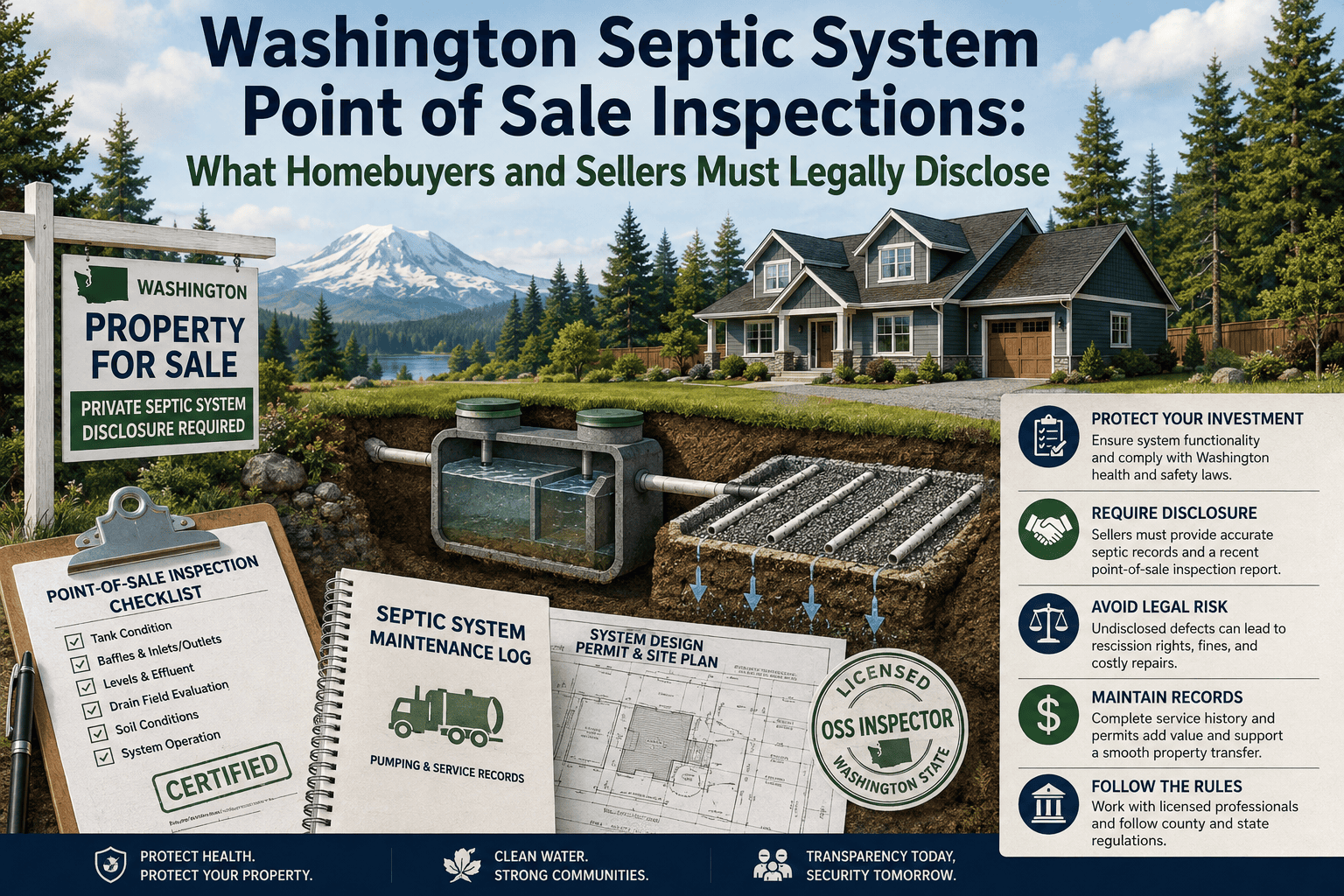
Navigating property transfers in Washington State requires meticulous adherence to environmental health statutes, particularly regarding On-Site Sewage Systems (OSS). When residential real estate transactions involve properties served by private septic, understanding the mandatory point-of-sale verification process is vital. Furthermore, statutory disclosure mandates require sellers to provide prospective buyers with accurate records regarding system performance, maintenance history, and recent pumping logs. Consequently, failing to secure authorized septic system inspections creates significant legal exposure and potential rescission rights for the buyer. In this guide, we analyze regulatory disclosure obligations, the mechanics of professional certification, and the risks of undocumented wastewater infrastructure.
Statutory Disclosure Mandates and Environmental Health Compliance
Washington State law necessitates that sellers disclose the status of all private utility infrastructure, including OSS, to ensure public health safety. County-specific ordinances often demand a “Time of Transfer” or point-of-sale evaluation conducted by a licensed professional to validate system functionality. As detailed in our guidance on Home improvement documentation: The essential archive guide, maintaining precise operational records protects owners against post-closing litigation. Specifically, hiding known failures or bypassing mandatory evaluation thresholds during escrow constitutes a material misrepresentation. Thus, prioritizing transparency during the due diligence phase mitigates future liability.
The Verification Protocol for On-Site Sewage Systems
Evaluating a septic system’s structural and biological integrity requires specialized expertise beyond standard home inspections. Technicians must assess absorption field saturation, tank corrosion, and baffle integrity to provide a valid operational certification. As emphasized in our regulatory framework on The Homeowner’s Compliance Audit: A Checklist for Before, During, and After Construction, rigorous auditing ensures long-term asset health. Moreover, unpermitted modifications or undocumented expansion work performed by previous owners can complicate the certification process. Consequently, obtaining a certified evaluation report is essential for securing financing and title insurance.
Financial Implications of Undisclosed System Defects
Discovering a failing septic drain field after the transfer of title can trigger massive repair expenses and potential groundwater contamination claims. If the system fails to meet current municipal codes, the property owner may face court-ordered upgrades that far exceed initial maintenance estimates. As highlighted in our resource on The Cost of Incomplete Data: Why Using Unverified Contractors Leads to Hidden Fees, relying on undocumented work causes compounding financial loss. Therefore, buyers should mandate an independent assessment if the seller’s documentation appears ambiguous or outdated.
Operational Maintenance Logs and Documentation Trails for Septic System Inspections
Managing complex wastewater infrastructure requires disciplined record-keeping to satisfy both municipal code auditors and future prospective buyers. When preparing your property for market, compiling a comprehensive archive of system service and inspections is paramount. To guarantee your property records support a smooth transfer, prioritize these administrative tasks:
- Pumping and Service Chronology: Additionally, assemble all historical maintenance logs, echoing the documentation importance detailed in The Documentation Trail: Essential Home Renovation Records.
- System Design Permits: Meanwhile, retrieve original installation permits and site drawings from county archives, aligning with standards discussed in Navigating Local Planning Departments: A Step-by-Step Guide for Washington Property Owners.
- Professional Certification Records: Finally, ensure the most recent point-of-sale report is signed by a certified OSS inspector recognized by your local health department.
Regulatory Oversight and Professional Resource Channels Supporting Septic System Inspections
Consulting official county health department resources ensures your wastewater system management remains compliant with evolving regional environmental statutes. Reviewing municipal guidelines prevents costly misinterpretations regarding septic system inspections and mandatory disclosure timelines. You can examine regional OSS standards and regulatory compliance resources directly through the Washington State Department of Health (WADOH). By anchoring your real estate strategy to official state and county oversight, you ensure absolute legal protection and sustainable asset management.