

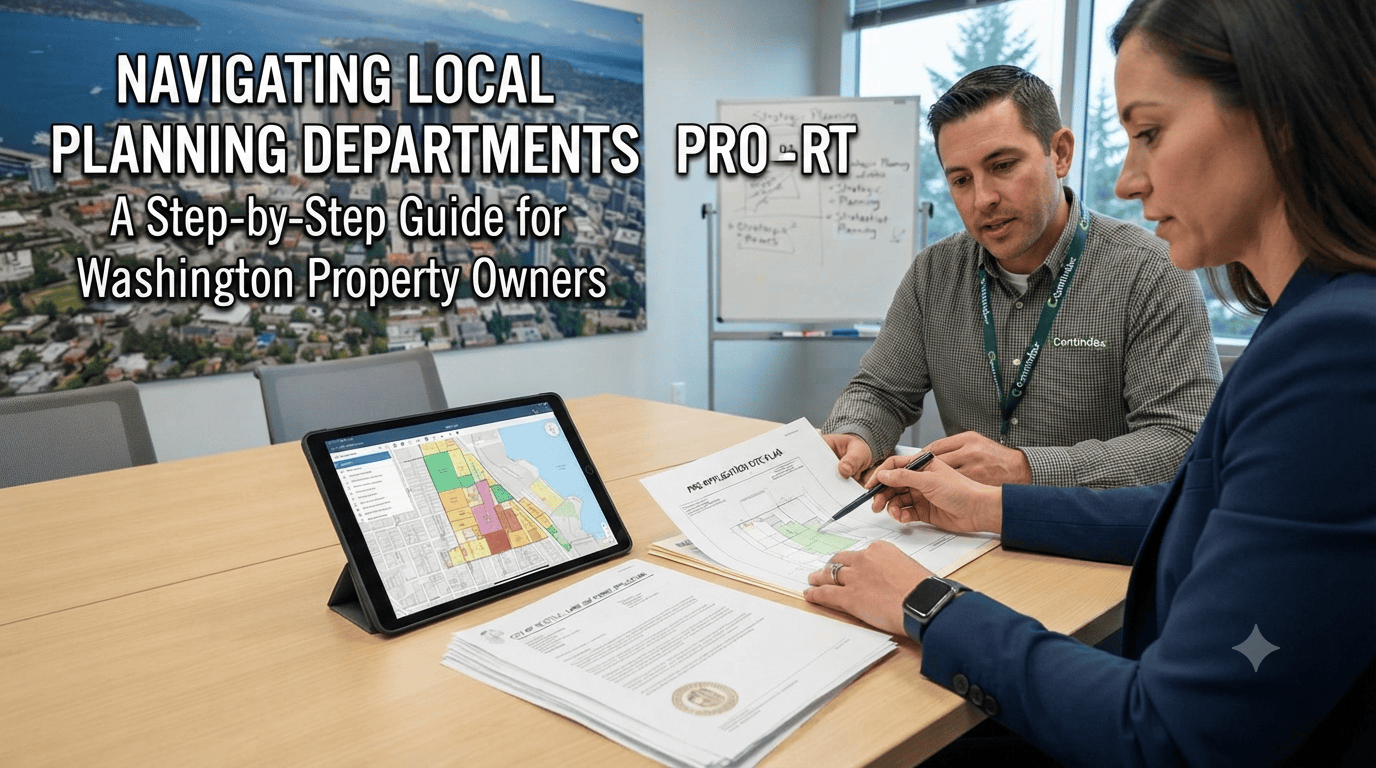
When you plan a home renovation or property addition, you face a complex regulatory environment. Too many property owners jump straight into construction without understanding regional rules. However, mastering the art of navigating local planning departments protects your investment from expensive fines. In addition, knowing the correct bureaucratic workflow ensures that your project moves forward without unexpected legal interruptions. Consequently, in this guide, we break down the exact steps required to handle municipal planning offices in Washington.
Why Navigating Local Planning Departments Dictates Overall Project Success
Every city and county in Washington maintains distinct zoning codes and land use laws. As a result, rules that apply in one municipality might not work in another. As detailed in our comparative analysis on Washington municipal building codes: A Comparative Guide, local oversight dictates how you manage structural modifications. Furthermore, by systematically navigating local planning departments, you prevent costly redesigns. Therefore, you establish a solid foundation before any physical work begins.
Preparing Initial Submissions and Property Data While Navigating Local Planning Departments
Before you ever speak to a city planner, you must gather precise physical records of your land. First, you should collect historical property files and prior architectural surveys. As outlined in our guide on Home improvement documentation: The essential archive guide, proper archiving saves weeks of administrative delays. Specifically, you must verify whether your property sits within specific municipal boundaries or specialized overlay zones. Thus, bringing accurate documentation to your initial meeting accelerates the review cycle.
The Step-by-Step Workflow for Municipal Submissions
Engaging with a city planning division requires a disciplined, sequential approach. To manage this process smoothly, you should follow these essential actions:
- Initial Zoning Inquiry: Contact the zoning desk to confirm if your intended project aligns with current local land use designations.
- Pre-Application Conferences: Request a preliminary review meeting for large additions to identify major hurdles early.
- Formal Plan Intake: Submit your architectural drawings through the municipal digital portal, ensuring compliance with standards similar to those found in Building permits in Washington: Seattle vs. Bellevue Requirements.
Mitigating Risks Through Rigorous Compliance Audits
Administrative oversight does not end once the planning department accepts your initial application. Throughout the lifecycle of your build, you must maintain active oversight. To understand how compliance fits into your overall timeline, consult The Contrindex Project Roadmap: A 4-Phase Lifecycle. Moreover, keeping a close eye on local requirements helps you avoid disasters like those discussed in Unpermitted Work Washington: Your Home Rescue Guide. Ultimately, proactive auditing safeguards your property title against future liens or stop-work orders.
External Resources for Official Washington Land Guidelines
Regulations change frequently based on state environmental policies and local ordinances. Thus, you should always cross-reference municipal advice with state-level planning portals. You can review authoritative state growth management guidelines directly through the Washington State Department of Commerce – Growth Management. By anchoring your project to official standards, you eliminate guesswork and ensure total legal transparency.