

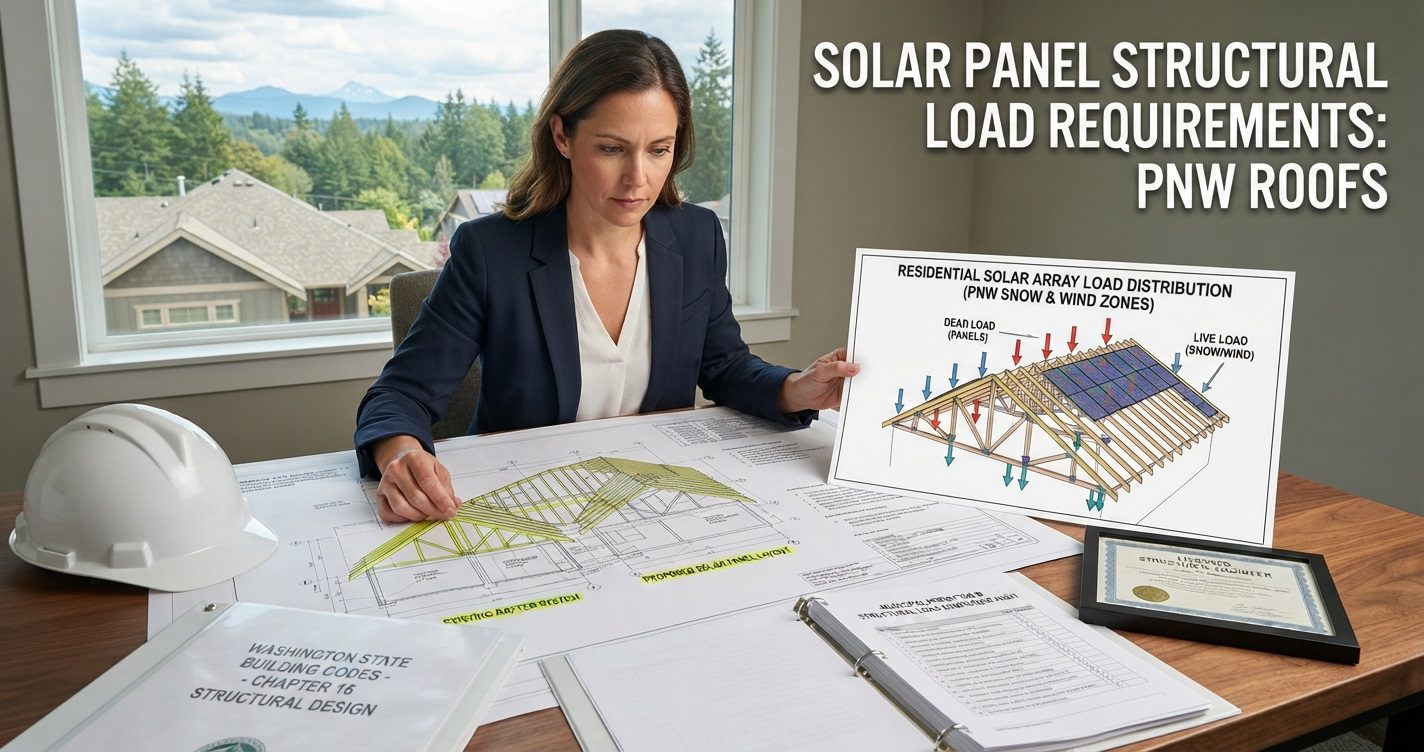
Transitioning residential energy systems toward renewable generation requires a rigorous understanding of architectural physics. When homeowners integrate photovoltaic technology into their properties, evaluating structural integrity is non-negotiable. Without engineering validation, heavy panel arrays can induce severe stress fractures. Therefore, analyzing solar panel structural load demands safeguards both your energy investment and building envelope. In this guide, we dissect dead load limits, regional snow pack dynamics, and engineering audits necessary for Pacific Northwest (PNW) residential structures.
Calculating Dead Load vs. Live Load Engineering Thresholds
Integrating photovoltaic modules introduces permanent dead weight across existing roof rafters and trusses. A standard residential solar array adds approximately three to five pounds per square foot of distributed weight. As detailed in our structural analysis on Statutory Liability Limits: Homeowner vs Contractor Risks, property owners carry legal accountability for structural modifications. Specifically, if underlying framing fails to support this added burden, interior drywall cracking and roof sagging inevitably follow. Thus, commissioning a licensed structural assessment before mounting hardware prevents catastrophic structural deformation.
The PNW Effect: Rain, Wind, and Heavy Snow Load Factors
Pacific Northwest weather patterns subject residential rooftops to severe environmental stressors that complicate solar integration. Winter storms frequently deposit heavy wet snow, compounding the gravitational stress exerted by fixed-tilt solar arrays. As emphasized in our regional asset guide on The PNW Effect on Residential Plumbing: Corrosion, Winter-Ready Maintenance, and Long-Term Cost Savings, regional climate factors demand resilient material engineering. Moreover, high-velocity wind zones across western valleys create aerodynamic lift forces beneath elevated panels. Consequently, fastener pull-out resistance and racking rigidity must exceed standard baseline building codes.
Structural Reinforcement and Rafter Modification Protocols
Older residential properties often require targeted framing reinforcements before supporting modern solar infrastructure. If an inspection reveals undersized rafters or degraded timber, builders must install collar ties, sister joists, or structural bridging. As outlined in our home modification overview on The Washington Home Addition: Is a Basement or Attic Conversion Better?, load distribution dictates long-term structural viability. Furthermore, failing to reinforce compromised roof planes risks voiding both manufacturer warranties and local municipal building approvals. Therefore, executing precise structural remediation protects your home equity from structural failure.
Municipal Permitting and Compliance Audits Regarding Solar Panel Structural Load
Navigating local municipal oversight ensures your renewable energy project satisfies state building codes and safety regulations. When submitting engineering plans addressing solar panel structural load, strict adherence to local ordinances is mandatory. To guarantee your structural blueprints clear municipal review without delay, incorporate these verification milestones:
- Engineering Load Calculations: Submit certified weight-distribution calculations matching criteria reviewed in Material Specifications: Why ‘Equivalent’ Materials in Estimates Can Compromise Your Home’s Value.
- Permit and Code Alignment: Secure proper local documentation, echoing compliance strategies detailed in Navigating Local Planning Departments: A Step-by-Step Guide for Washington Property Owners.
- As-Built Documentation Archiving: Retain complete engineering logs for future property audits, mirroring protocols from The Documentation Trail: Essential Home Renovation Records.
Official State Resources and Engineering Standards for Solar Panel Structural Load Compliance
Relying on verified state frameworks guarantees your renewable energy transition complies with regional construction statutes. Consulting official building databases prevents costly misinterpretations regarding structural load allowances and electrical mandates. You can review building codes and structural safety bulletins directly through the Washington State Department of Labor & Industries (L&I). By anchoring your solar project design to official regulatory standards, you ensure total structural safety and long-term asset protection.