

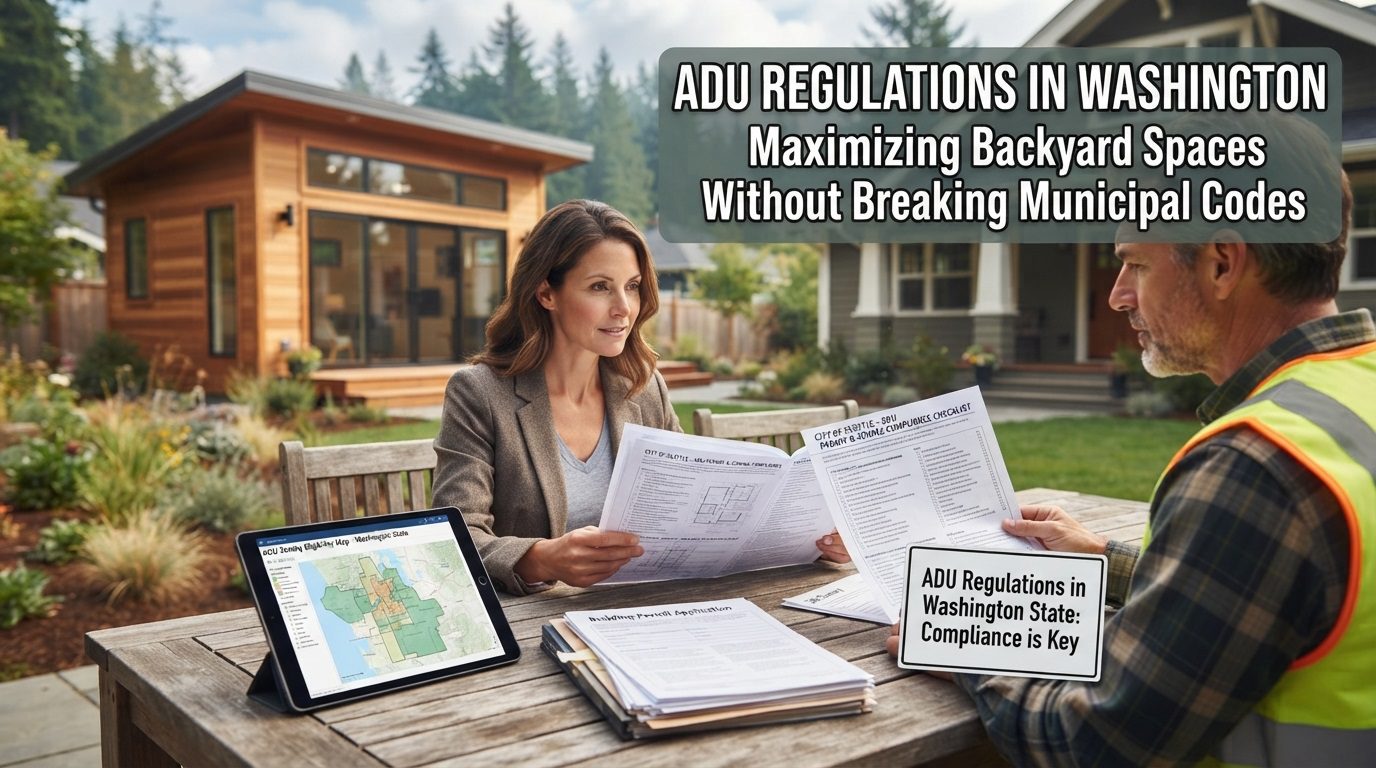
As housing demands shift across the Pacific Northwest, property owners frequently look toward accessory dwelling units to maximize property utility. However, launching a backyard construction project requires strict compliance with local legal frameworks. Therefore, understanding ADU regulations in Washington is vital before committing capital to architectural blueprints. In this guide, we analyze the financial implications, the mandatory municipal standards, and the compliance safeguards needed to protect your investment.
The Financial Landscape and Cost Realities of Washington ADUs
Constructing a detached or attached secondary dwelling involves significant capital investment. Because material pricing and labor rates fluctuate, homeowners must analyze comprehensive estimates carefully. As warned in our guide on How to Read a Construction Estimate Without Getting Scammed, transparency prevents hidden financial overruns. Specifically, foundation work, utility hookups, and framing dictate the baseline budget. Thus, establishing a rigorous financial framework ensures your project remains economically viable from inception to completion.
Navigating Local Municipal Codes and Permitting Hurdles
State laws establish broad guidelines, but individual cities enforce distinct structural boundaries. For instance, zoning requirements can vary drastically between metropolitan districts. As detailed in our comparative analysis on Washington municipal building codes: A Comparative Guide, overlooking regional differences will halt construction. Furthermore, ignoring municipal pathways invites severe legal consequences. To ensure a seamless administrative process, property owners must follow the structural protocols outlined in Navigating Local Planning Departments: A Step-by-Step Guide for Washington Property Owners.
Avoiding Unpermitted Work and Protecting Your Property Title
Attempting to bypass the local building department to save time creates catastrophic long-term risks. If you proceed without authorization, municipal authorities can mandate expensive demolition or block future property sales. As highlighted in Unpermitted Work Washington: Your Home Rescue Guide, clearing every phase through official channels secures your equity. Moreover, unpermitted structures often lead to legal vulnerabilities regarding property liens. Consequently, maintaining an organized archive of all municipal approvals safeguards your title against future disputes.
The Homeowner’s Compliance Audit Guided by ADU Regulations in Washington
Executing a complex residential addition requires disciplined administrative management. When navigating official ADU regulations in Washington, ensuring complete alignment with local standards is critical. To guarantee your project satisfies regulatory audits, follow these essential protocols:
- Verification of Professional Credentials: Confirm your general contractor holds an active license via state databases, as outlined in How to Use Official State Data to Verify Your Contractor’s License.
- Archival of Inspection Sign-offs: Retain every municipal inspection card issued throughout the framing and utility phases.
- Centralized Documentation Storage: Keep all records secure, mirroring the best practices found in The Documentation Trail: Essential Home Renovation Records.
Official State Resources and Legal Frameworks for ADU Regulations in Washington
Relying on verified state statutes ensures your architectural plans align with current legislation. Using government data prevents costly misinterpretations of height limits, setbacks, and lot coverage maximums. You can review statutory housing policies and legislative updates directly through the Washington State Department of Commerce – ADU Guidance. By anchoring your project planning to official state frameworks, you ensure total compliance and long-term asset security.