

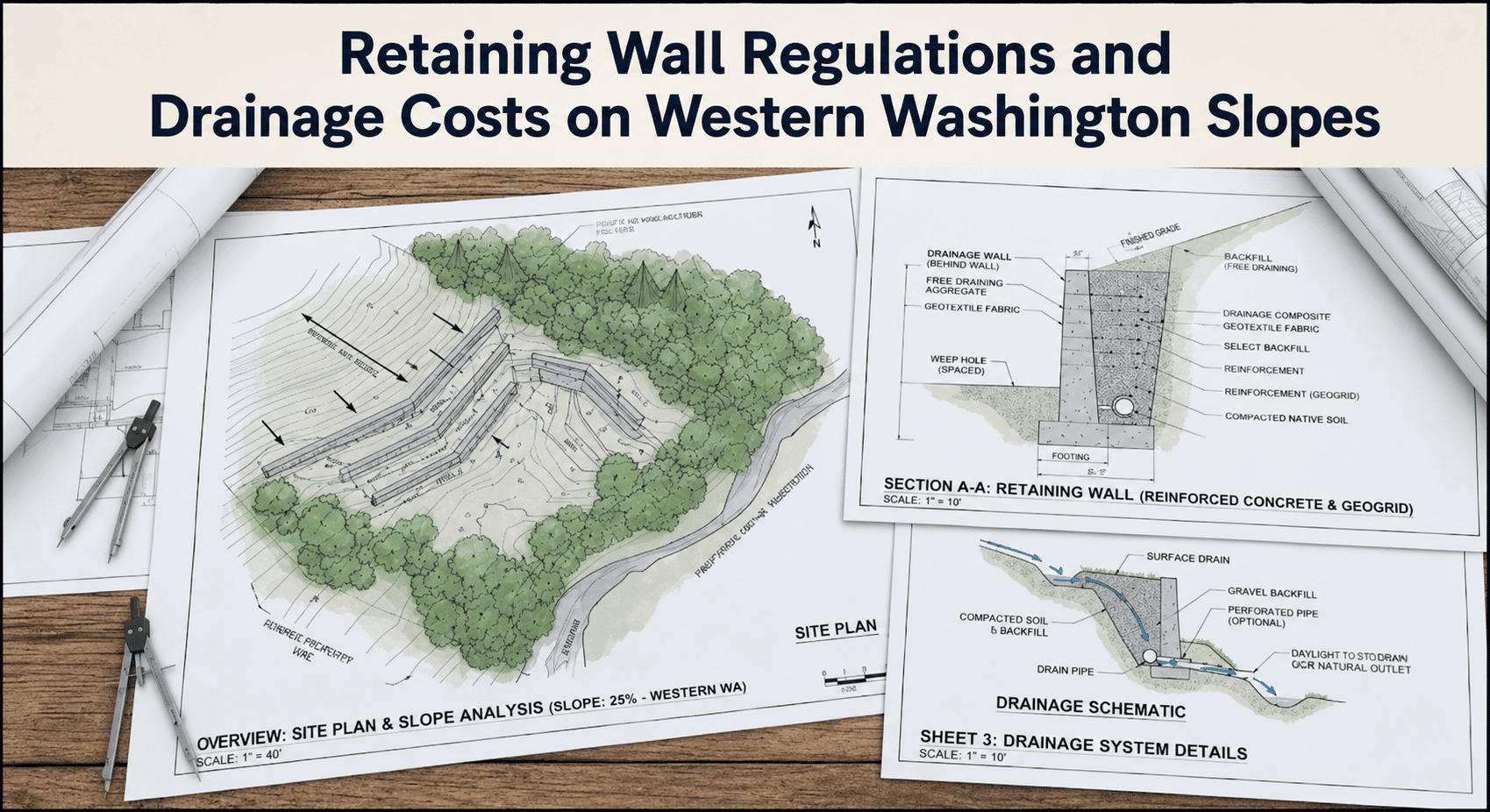
Engineering terraced landscapes or foundational defenses across Pacific Northwest inclines requires strict adherence to local municipal bylaws and hydraulic engineering principles. When property owners execute earth-retention projects on saturated declivities, understanding retaining wall regulations drainage costs is vital. Furthermore, failing to implement adequate sub-surface water management triggers devastating hydrostatic pressure accumulation, resulting in catastrophic slope failure. Consequently, analyzing municipal height thresholds, geotechnical engineering mandates, and drainage installation expenditures protects your real estate equity. In this guide, we evaluate legal permitting frameworks, subterranean drainage economics, and structural stability standards across Western Washington.
Municipal Permitting Thresholds and Geotechnical Engineering Mandates
Local jurisdictions enforce rigorous vertical height thresholds before compelling professional structural engineering stamps and formal municipal site permits. In most Western Washington counties and cities, any earth-retaining structure exceeding four feet demands comprehensive structural calculations. As detailed in our municipal compliance overview on Building permits in Washington: Seattle vs. Bellevue Requirements, unpermitted grade modifications face severe legal stop-work orders. Specifically, steep-slope overlay zones require comprehensive geotechnical reports analyzing soil cohesion angles and seismic surcharge loads. Thus, validating local municipal codes before ordering materials prevents costly structural demolition.
2. Hydrostatic Pressure Mechanics and Sub-Surface Drainage Economics
Water accumulation behind earth-retaining structures generates massive hydrostatic forces that can easily fracture reinforced concrete or displace gravity blocks. Integrating perforated collector pipes, washed gravel backfill, and geotextile filter fabrics is indispensable for relieving sub-grade moisture buildup. As emphasized in our project framework on The Contrindex Project Roadmap: A 4-Phase Lifecycle, systematic site preparation dictates long-term structural viability. Moreover, neglecting proper drainage installation can escalate repair expenditures by thousands of dollars due to foundation shifting. Consequently, budgeting for comprehensive subterranean drainage systems is mandatory for weathering PNW winters.
3. Material Specifications and Regional Cost Variances
Selecting appropriate structural materials directly influences both initial installation investments and the long-term durability of hillside retaining walls. Contractors frequently debate between poured concrete, interlocking segmental blocks, and treated timber cribbing based on load requirements. As outlined in our estimation analysis on Material Specifications: Why ‘Equivalent’ Materials in Estimates Can Compromise Your Home’s Value, sub-par substitutions invite premature wall degradation. Furthermore, regional labor shortages and steep-site equipment access fees heavily impact overall project execution timelines. Therefore, scrutinizing itemized cost estimates prevents hidden budgetary escalation during construction.
The Slope Excavation Compliance Assessment Protocol Addressing Retaining Wall Regulations Drainage Costs
Managing complex grade alterations requires disciplined documentation tracking across every phase of residential civil engineering construction. When managing projects involving retaining wall regulations drainage costs, implementing a structured verification protocol is essential. To guarantee your hillside interventions clear municipal review without legal setbacks, follow these critical checkpoints:
- Geotechnical Data Verification: Additionally, cross-reference site soil profiles matching criteria reviewed in Official State Data vs. Online Reputation: Why It Matters.
- Permit and Setback Alignment: Meanwhile, align property line setbacks against local ordinances, echoing standards detailed in Washington Municipal Building Codes: A Comparative Guide.
- Archival Documentation Logs: Finally, maintain digital records of all engineering sign-offs, mirroring practices from The Documentation Trail: Essential Home Renovation Records.
Governmental Supervision and Expert Resource Networks Supporting Retaining Wall Regulations Drainage Costs
Consulting official state and municipal regulatory bodies ensures your structural landscaping complies with regional environmental and building codes. Reviewing municipal bulletins prevents costly misinterpretations regarding critical area protections and stormwater management mandates. You can examine regional building standards and code compliance resources directly through the Washington State Department of Labor & Industries (L&I). By anchoring your civil project to verified official oversight, you secure absolute asset protection and long-term structural resilience.