
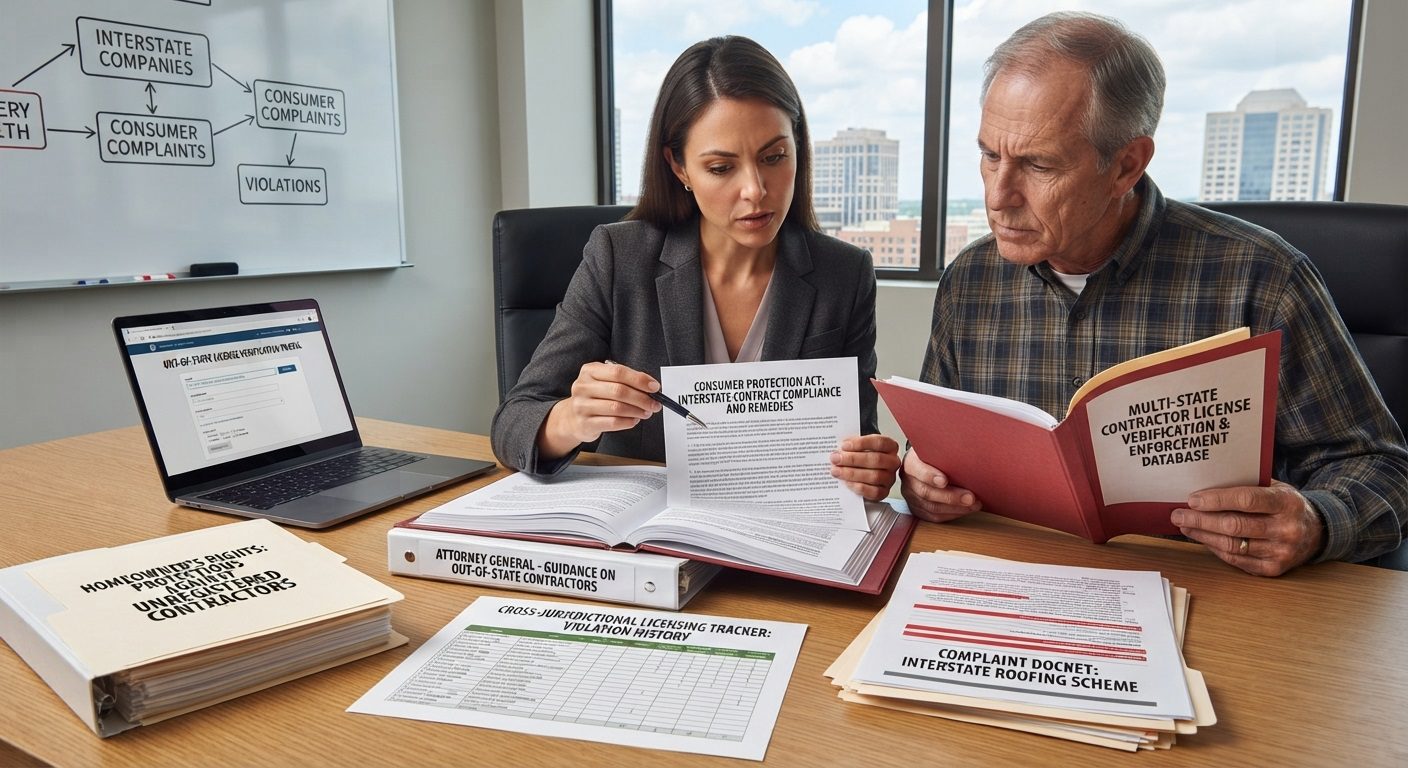
Engaging contractors who operate across municipal or state boundaries introduces complex legal vulnerabilities for residential property owners. When out-of-state entities solicit construction projects, verifying their regional licensing status is paramount. Furthermore, jurisdictional gaps make pursuing legal recourse or recovering financial damages exceptionally difficult if a project collapses. Consequently, understanding out of state contract fraud safeguards your property title against predatory multi-state operations. In this guide, we analyze cross-border bonding requirements, multi-jurisdictional lien risks, and protective contractual safeguards for Washington homeowners.
Jurisdictional Loopholes and Cross-Border Contractor Vulnerabilities
Contractors operating across state lines frequently exploit regulatory disconnects between state licensing boards and local enforcement agencies. Unscrupulous operators often deploy out-of-state corporate shells to obscure past regulatory violations and consumer complaints. As detailed in our verification overview on Contractor Compliance Verification: Data-Driven Hiring in WA, analyzing official state databases prevents fraudulent hiring. Specifically, foreign entities may lack physical storefronts within Washington, rendering standard service of process nearly impossible during disputes. Thus, establishing local corporate accountability before signing agreements prevents catastrophic financial exposure.
Multi-Jurisdictional Construction Liens and Title Encumbrances
Unregistered out-of-state subcontractors often attempt to recover unpaid balances by attaching mechanics’ liens directly to residential titles. When an itinerant firm defaults on material suppliers, property owners face sudden encumbrances threatening home equity. As emphasized in our legal protection guide on Avoid Construction Liens in WA: Homeowner’s Legal Guide, statutory lien notices follow strict procedural timelines. Moreover, navigating cross-state legal frameworks complicates efforts to discharge fraudulent liens through local courts. Consequently, implementing stringent lien waiver protocols during every payment phase secures your property title against unlawful claims.
Financial Shielding: Managing Pre-Contract Deposits and Escrow Security
Predatory out-of-state contractors frequently demand inflated upfront capital before abandoning project sites entirely. Mitigating financial exposure requires enforcing strict payment disbursement rules tied strictly to verifiable construction milestones. As outlined in our consumer defense resource on The Payment Schedule Rule: Why You Should Never Pay More Than 10% Upfront, limiting initial advances deters fraudulent abandonment. Furthermore, transferring funds via secure escrow accounts rather than direct wire transfers provides a verifiable paper trail. Therefore, conditioning fund releases on successful municipal inspection milestones protects your renovation budget.
The Compliance Audit Protocol for Interstate Construction Agreements and Out of State Contract Fraud Prevention
Managing high-value home improvements executed by multi-jurisdictional entities requires rigorous documentation tracking. When preparing safeguards addressing out of state contract fraud, implementing a structured verification protocol is vital. To guarantee your legal protections withstand cross-border disputes, follow these critical verification checkpoints:
- Bonding and Insurance Validation: Additionally, verify active surety bonds matching criteria reviewed in Statutory Liability Limits: Homeowner vs Contractor Risks.
- Licensing Board Cross-Checks: Meanwhile, audit primary state registration registries, echoing standards detailed in How to Use Official State Data to Verify Your Contractor’s License (A Contrindex Guide).
- Archival Agreement Logs: Finally, maintain digital records of all out-of-state communications, mirroring practices from The Documentation Trail: Essential Home Renovation Records.
Official State Consumer Protection Resources and Recourse Agencies for Out of State Contract Fraud Defense
Relying on verified government regulatory channels ensures your construction contracts comply with Washington consumer protection statutes. Consulting official state enforcement databases prevents costly misinterpretations regarding interstate commercial liabilities. You can review contractor complaint histories, active litigation registries, and licensing status reports directly through the Washington State Department of Labor & Industries (L&I). By anchoring your hiring strategy to official regulatory oversight, you ensure total legal protection against predatory out-of-state practices.