
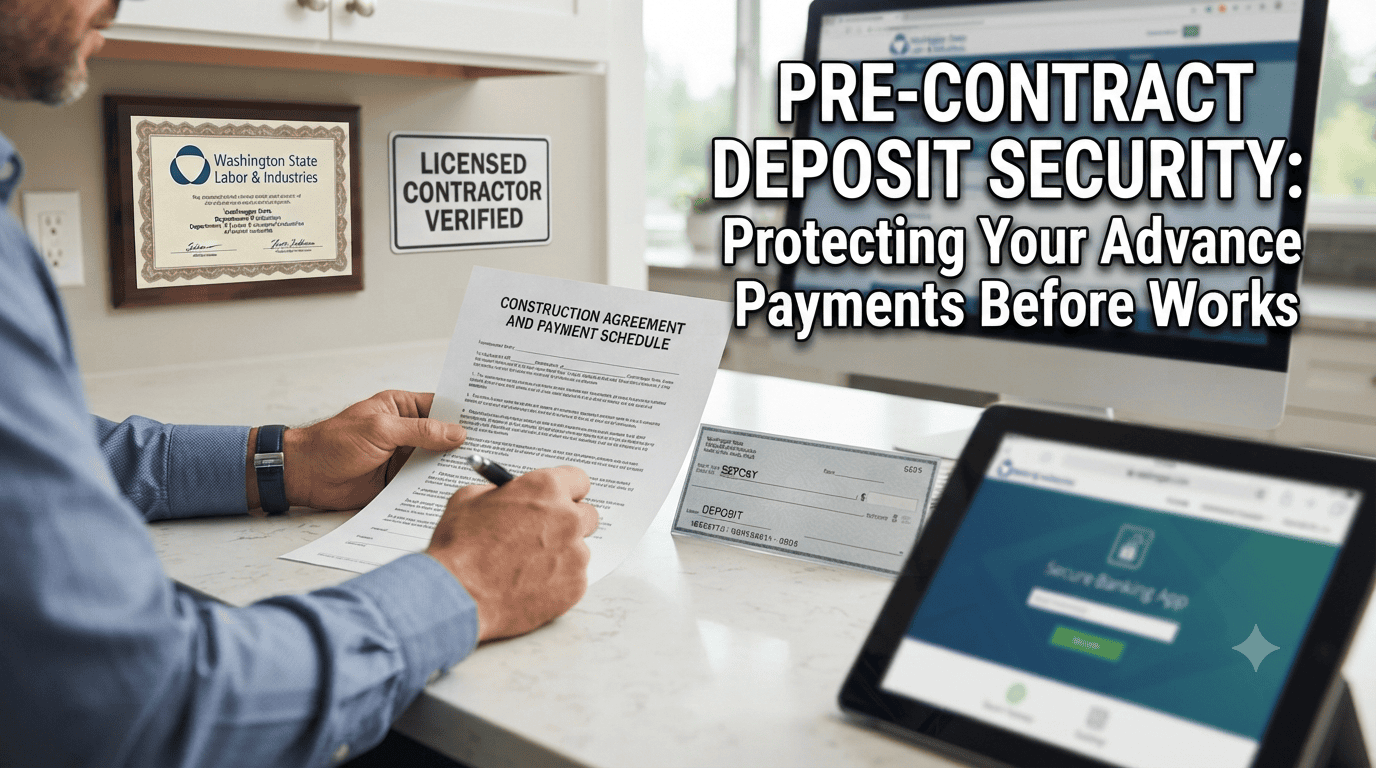
When you hire a contractor, money moves fast. However, your hard-earned funds need strict protection. Specifically, mastering pre-contract deposit security ensures you protect your capital before the first nail is driven. In fact, improper handling of advance payments causes the majority of project disputes. In this guide, we break down how you can formalize your financial protection.
Why Strict Project Oversight and Advance Payment Protections Matter
Most homeowners trust contractors based on verbal promises or online reviews. Unfortunately, this lack of oversight creates a high-risk environment. Therefore, implementing a robust strategy for pre-contract deposit security acts as your primary legal shield. By requiring detailed invoices and milestone-based payments, you shift the power dynamic. Essentially, you control the project lifecycle rather than risking unmanaged capital. Without these controls, you leave your funds vulnerable to contractor insolvency.
Essential Steps to Ensure Proper Pre-Contract Deposit Security and Financial Safety
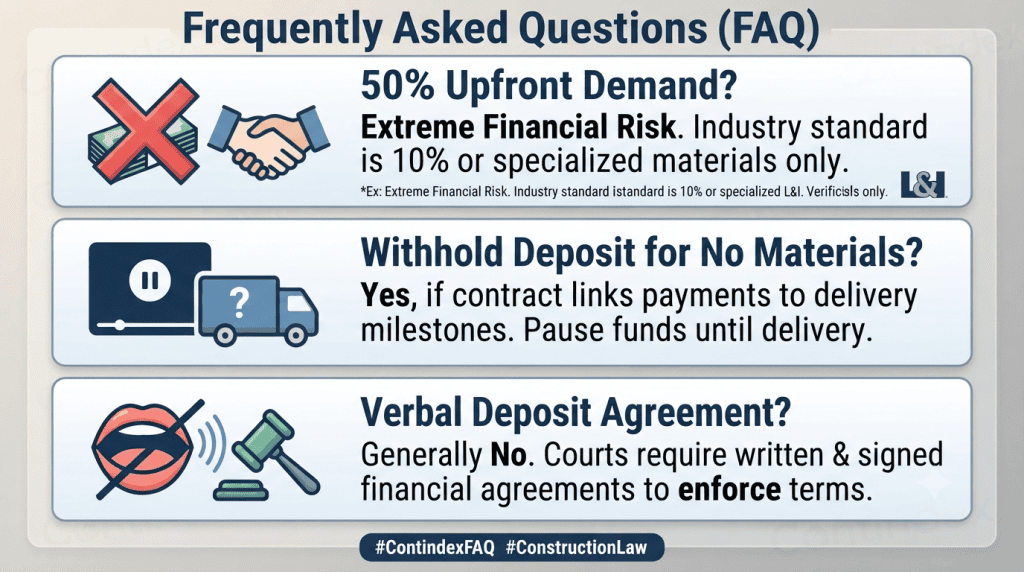
To guarantee your financial safety, you must move beyond standard contracts. First, verify the contractor’s credentials against state data. As highlighted in our guide on The Payment Schedule Rule: Why You Should Never Pay More Than 10% Upfront, keeping initial payments low offers your best defense.
Furthermore, you should apply these additional steps for your pre-contract deposit security plan:
- Escrow Accounts: For large-scale renovations, you can propose an escrow service where a third party holds funds until workers complete specific phases.
- Itemized Estimates: Reject any “lump sum” quote immediately. You must demand a detailed breakdown of materials and labor costs to ensure the deposit matches the initial work.
- Written Refund Policies: Write specific refund conditions into your contract so you recover your deposit if delays occur.
The Legal Safeguards You Need for Effective Pre-Contract Deposit Security
Risk mitigation demands more than just a handshake. For instance, you should always request lien waivers. To learn how you can verify your professional’s background effectively, consult our resource: How to Use Official State Data to Verify Your Contractor’s License (A Contrindex Guide).
Moreover, you must understand the legal limits regarding advance payments. Many states strictly limit how much cash a contractor can collect before breaking ground. Consequently, if a contractor refuses to discuss these safeguards, you face a major red flag. Treat the contract as a binding financial instrument that secures your property title.
External Validation and Long-Term Strategies for Pre-Contract Deposit Security
Regulations vary by jurisdiction, but transparency remains your gold standard. Thus, you should always cross-reference contractor claims with official state guidelines. You can find authoritative information on consumer rights here: Washington State Attorney General – Home Improvement Construction.
Maintaining pre-contract deposit security requires a proactive mindset. By archiving every receipt, permit, and contract amendment, you build a physical paper trail that protects you if a dispute arises. Remember: an honest contractor will always welcome full transparency.